
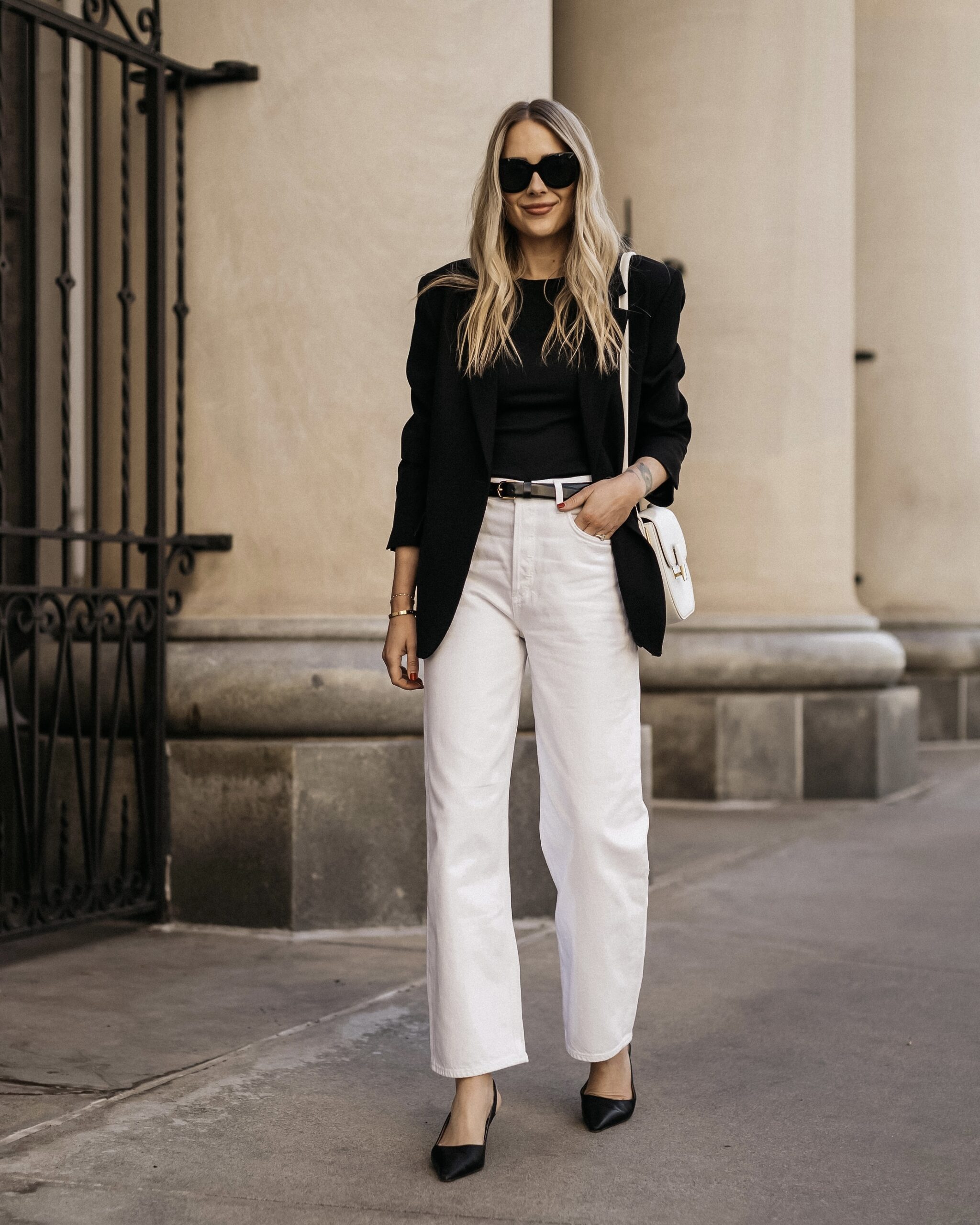
A tailored jacket and a light trouser make a useful picture of what a considered wardrobe purchase should achieve. Each piece contributes to a complete outfit, and each should also work on its own. Begin the shopping decision with that second question. Think about where the new garment would fit among clothes that already see regular use.
Bring the relevant layers and shoes into the fitting process. A jacket may feel different over a shirt than over a thin top, and a trouser hem depends on the shoes underneath it. Check the shoulders, the fastening, and the way the fabric falls from the side. Move naturally rather than holding a pose that makes the garment look its best.
Use a few ordinary movements as a checklist. Reach forward, sit down, and put a hand in a pocket. Notice whether the waistband stays comfortable and whether the jacket pulls across the back. If something needs altering, identify the change clearly and ask about the likely work before treating the fit as settled. The practical cost includes that work.
Read the material and care information with your own routine in mind. A piece that requires a different cleaning arrangement needs room in both the budget and the schedule. Look at the lining, closures, and seams while considering how you will wear it. These checks help turn a vague impression of quality into details you can actually assess.
Finish with three complete combinations using existing clothes. Include one ordinary day as well as any special occasion you have in mind. Save the information and give yourself time to revisit the decision. A higher price does not decide whether a garment will be useful; the strongest reason to buy is a clear place for it in the life you already lead.
Read the Comments +
Loading comments…
Leave a Reply
Your email address will not be published. Required fields are marked *