
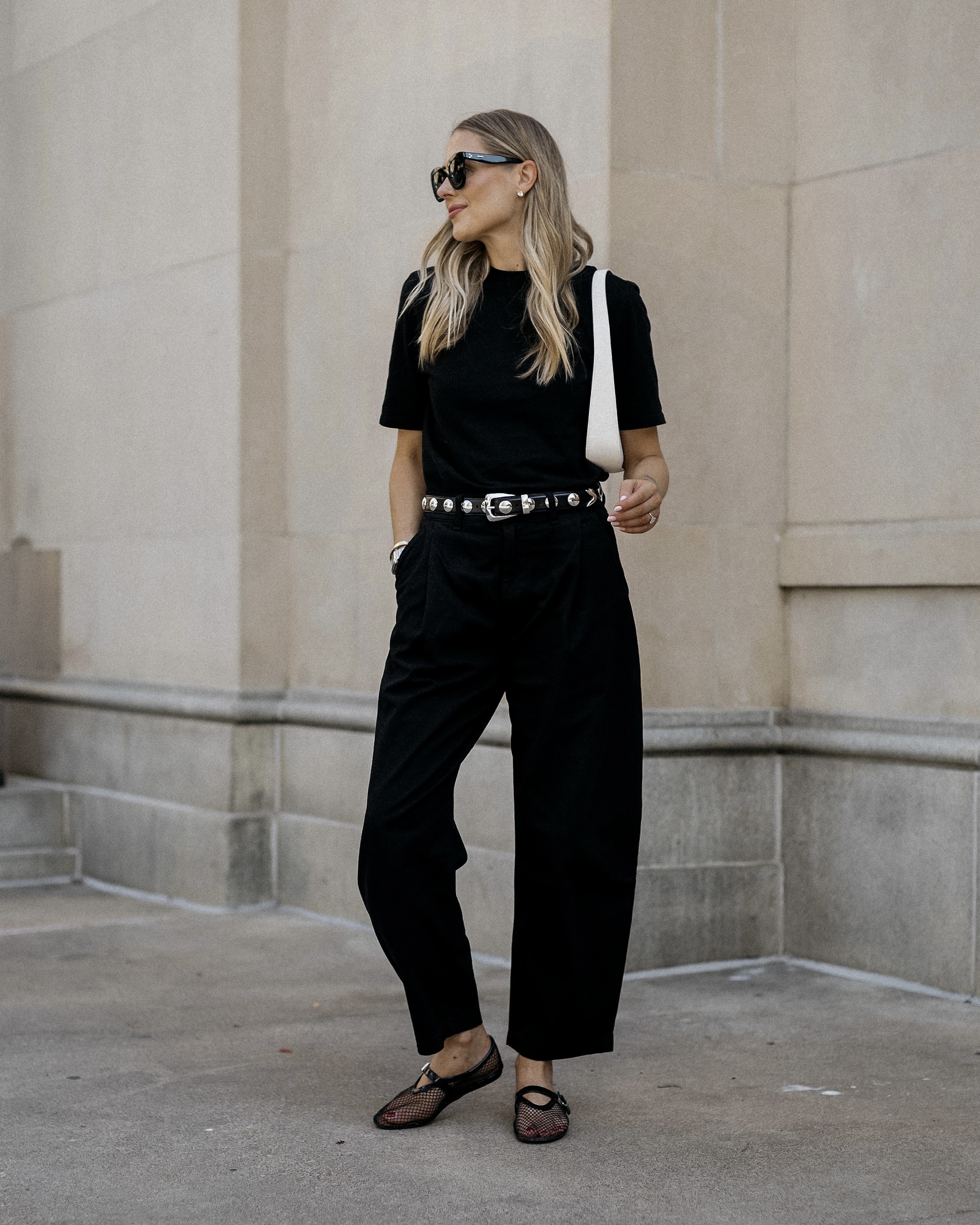
An all-black outfit puts the outline of the clothes into focus. The short sleeve, the position of the waistband, and the width of a trouser leg become the main details. Begin with the silhouette in the accompanying look: a relaxed top above a longer, wider base. It is a useful starting point for pieces already hanging in a wardrobe.
Try the top both tucked and loose before adding anything else. A full tuck creates a clear division at the waist, while a small front tuck leaves movement through the sides. If the top ends at the widest point of the trousers, a slightly shorter layer may make the shape easier to read. Check the side view as well as the front.
Give the fabrics different jobs. A soft, matte top can sit against trousers with a smoother surface or a little more structure. The change in finish brings definition to two similar colors. Look at the pieces together in daylight, where a faded black and a deeper black may feel intentional or may suggest a different pairing.
Choose the shoes early enough to judge the hem properly. A flat sandal leaves more of the foot visible, while a closed shoe makes a continuous dark line. Walk, sit, and turn in the trousers with that pair on. A hem that drags or catches under the heel will need attention before the outfit becomes an easy everyday option.
Keep the finishing details selective. A belt can repeat the shoes, and a small metal accent can give the eye a place to settle. Place the bag beside the whole outfit rather than judging it on its own. Once the proportions feel comfortable, photograph the combination for another morning; the same outline can take on a different mood with one change of shoe.
Read the Comments +
Loading comments…
Leave a Reply
Your email address will not be published. Required fields are marked *