
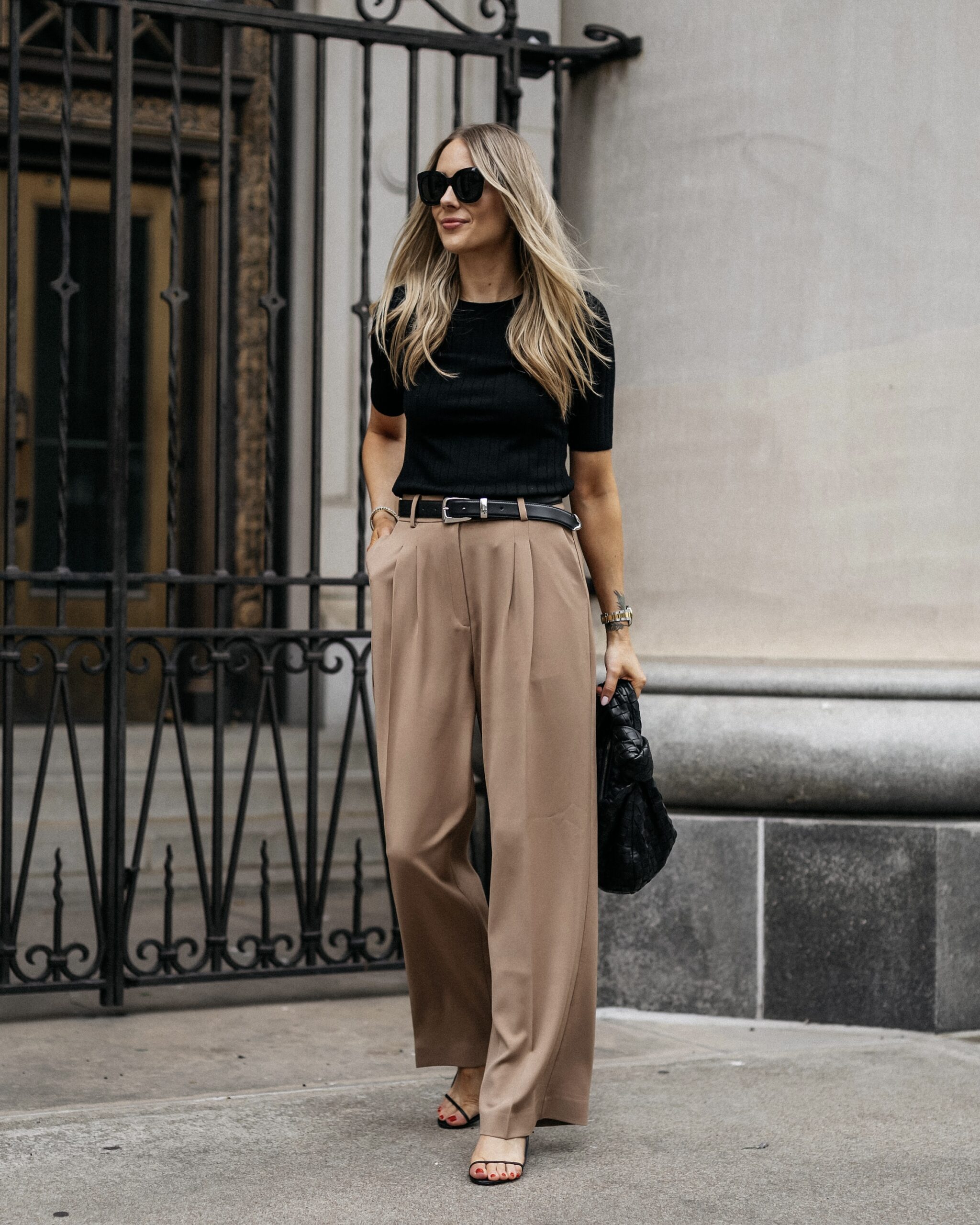
Black and taupe create a useful foundation because they let the cut of the clothes remain visible. A dark sleeveless top gives a clear beginning to the outline, while a wider taupe trouser brings a softer contrast below it. The accompanying look is a starting point for exploring those proportions, rather than a list of pieces that all need replacing.
Begin by grouping the neutrals you already wear. Put a few tops and bottoms together in daylight, then notice which combinations feel easy without much adjustment. A warm taupe may sit differently beside cream than it does beside a cool white. Keep the combinations that appeal to you and use those observations when considering another item.
Let the weight of the fabrics vary. A close-fitting ribbed top can balance a fluid trouser, and a smooth tank can sit against a more substantial waistband. If both pieces are loose, use the tuck or the neckline to give the outfit a little definition. The color palette can remain simple while the surfaces provide enough detail.
Use accessories to make the combination feel connected. A dark belt and bag can repeat the top, while a lighter shoe may echo the trousers. Try the alternatives one at a time and check the whole outline in a mirror. A small tonal change often has more effect when the rest of the outfit has been kept consistent.
Make the palette work across a few different days. Add a blue shirt for a cooler morning, a soft knit for an indoor setting, or a lighter top for warm weather. Check each combination with the shoes it will need. This approach builds a set of wearable options around a familiar foundation, with room for personal color preferences to develop over time.
Read the Comments +
Loading comments…
Leave a Reply
Your email address will not be published. Required fields are marked *